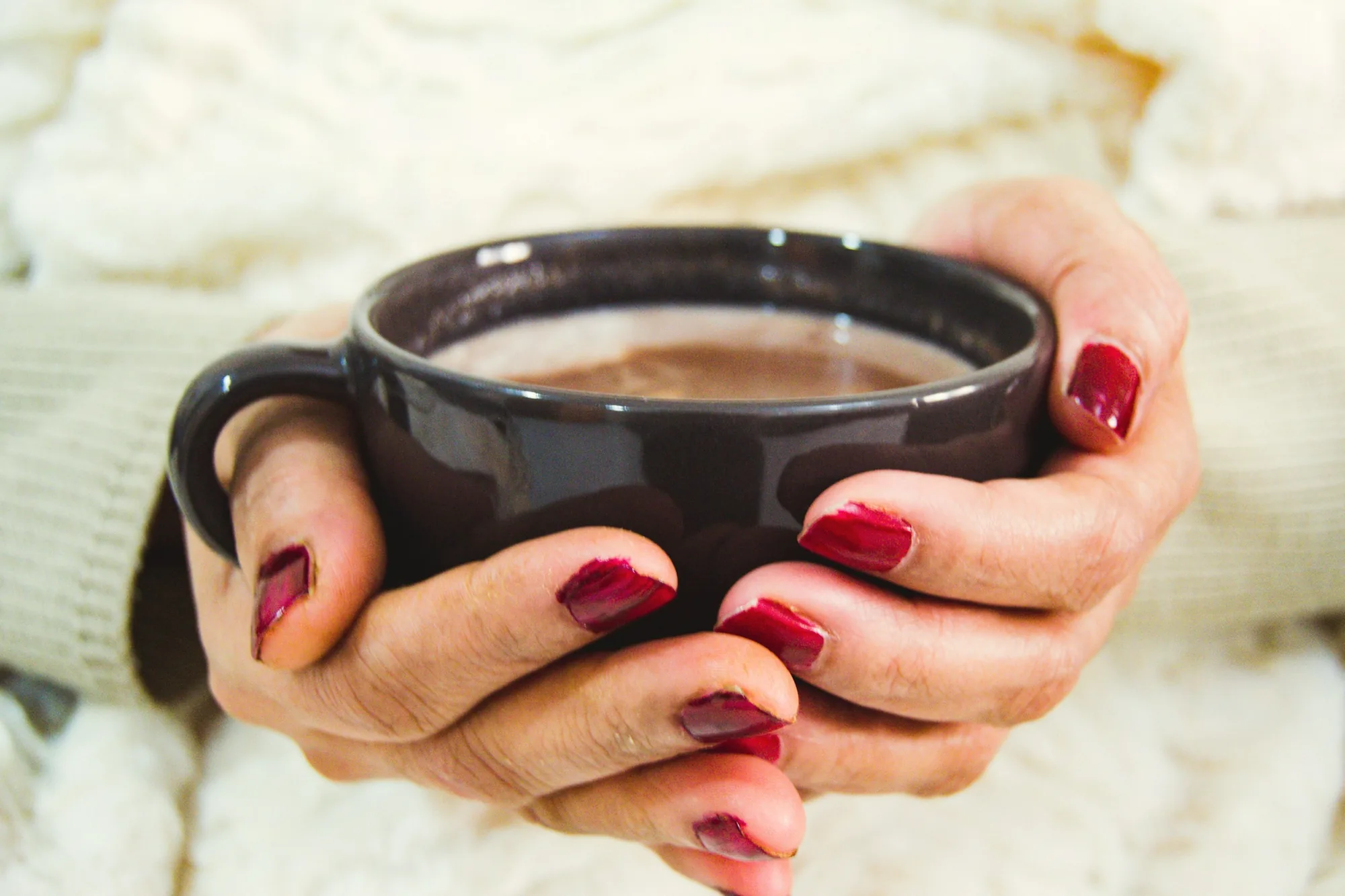
Minnesota winters are hard on hands. The air outside is cold and dry, the air inside is heated and dry, and between hand washing and sanitizer your skin rarely gets a break. Nails lose moisture, turn brittle and split, and cuticles crack into painful hangnails. The good news: a few minutes of care a day makes a real difference.
Here is why winter dries nails out, a simple routine for the cold months, and the studio services that help when your hands need more than a good cream.
In short
- Cuticle oil twice a day is the single most useful habit.
- Use hand cream after every wash, and wear gloves outside and for chores.
- Lukewarm water, a humidifier at home and a practical length all help.
- Builder gel can protect thin, bendy nails through the season.
Why winter is so hard on your nails
- Dry air, indoors and out. Cold air holds little moisture, and forced-air heating dries it further.
- Hot water and frequent washing. Hot water and soap strip the natural oils that keep skin and nails flexible.
- Hand sanitizer. It dries the skin around the nails quickly.
- Cold, then heat, then cold again. Going from a heated car to a snowy parking lot and back, all day long, is hard on dry skin and nails.
- Winter chores. Scraping the windshield and shoveling snow without gloves are rough on nails.
A simple winter nail care routine
- Cuticle oil, morning and night. Massage a drop into each cuticle and along the sides of the nail. Keep a bottle by the bed and one in your bag.
- Hand cream after every wash. A richer cream works better in winter than a light lotion. Rub the extra into your cuticles.
- Lukewarm, not hot, water. Then pat your hands dry completely, including under rings.
- Gloves outside and for chores. Warm gloves for the cold, and rubber gloves for dishes and cleaning.
- A humidifier at home. Running one overnight in the bedroom helps your skin and nails hold on to moisture.
- A practical length. Slightly shorter nails catch and split less when they are dry.
- An overnight treat. Once or twice a week, apply a thick layer of cream before bed and wear cotton gloves.
Choosing a hand cream and cuticle oil
You do not need anything expensive. In winter, a thicker hand cream usually works better than a light lotion: look for moisturizing ingredients such as glycerin, shea butter or ceramides, and a texture that still feels a little rich after you rub it in. For cuticles, a simple nail oil does the job; jojoba is a popular base because it soaks in well. Fragrance-free products are kinder to skin that is already cracked.
The best product is the one you actually use, so keep them where your hands are: by the sink, on your desk, in the car and next to the bed.
Hangnails and cracked cuticles: what not to do
It is tempting to pull a hangnail, but that tears living skin and can let germs in. Instead, clip it cleanly close to the skin with clean nippers and apply cuticle oil. Do not bite your nails or cuticles. If the skin around a nail turns red, swollen or painful, or a crack will not heal, check with a doctor.
Gel nails in winter
Some people notice a set lifts a little sooner in winter, when the nail underneath is drier and more brittle. Cuticle oil around the edge of the set helps, and so does leaving any lifting edge alone until your appointment. If your natural nails are thin and bend or peel in the cold, a builder gel overlay adds a protective layer at your own length.
Wearing Gel-X through the winter? The tips in how long Gel-X lasts help your set last its full three to four weeks.
Winter colors and finishes
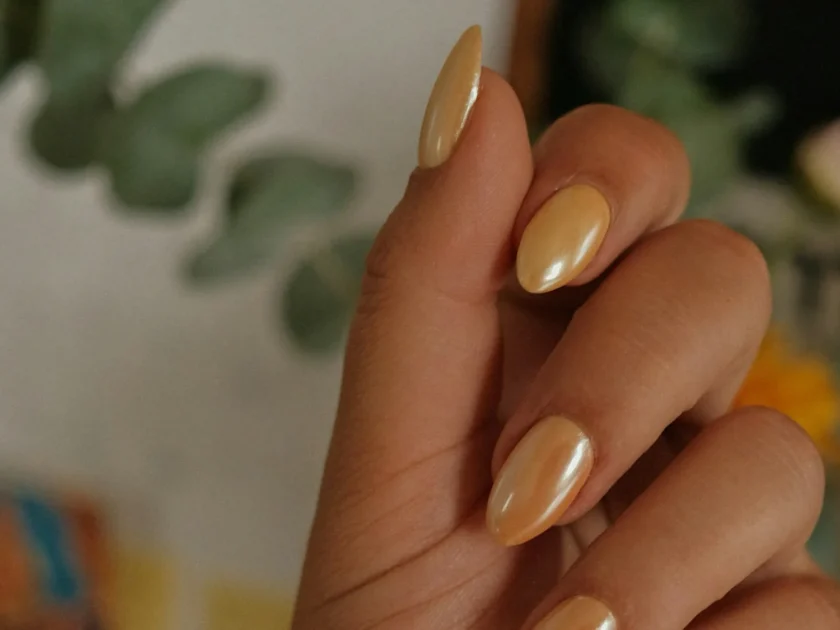
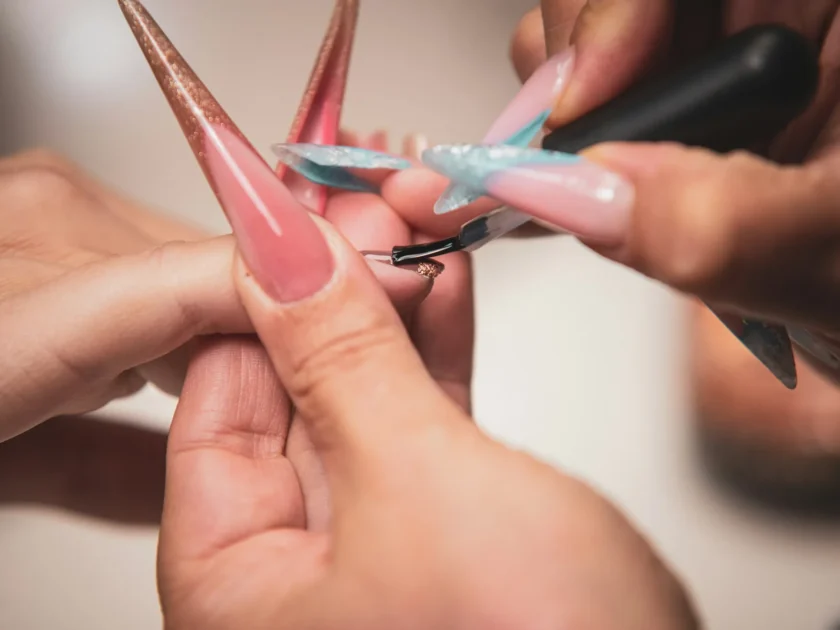
Winter is a good season for deep, warm shades: wine red, espresso brown, plum, or a soft nude with a glossy top coat. Cat eye gel (+$25), with its moving magnetic shine, looks lovely in low winter light, and a few accents of nail art (from +$30) make a set feel festive for the holidays. Bring a photo to your appointment, and the shade and finish are agreed before anything goes on.
Studio services that help in winter
- Russian manicure ($60): dead, dry skin is removed from the nail plate, leaving a clean cuticle line, and hand care is included. Read what a Russian manicure is.
- Hand spa (an add-on, +$20): hand wash, exfoliation, a hand mask and massage.
- Builder gel overlay ($70): strength for thin or brittle nails, without added length.
- Pedicures (from $50): heel care, sugar scrub, foot mask and a hot towel for feet that live in boots all winter.
Your feet need winter care too
Boots and wool socks keep feet warm but dry, and heels can crack. Use a rich foot cream at night, keep toenails trimmed straight across, and give your feet a proper reset with a pedicure: the studio offers a Sugar Pedicure ($50), a Russian Pedicure ($85) and a long Relaxing Pedicure ($90).
Frequently asked questions
Why do my nails break more in winter?
Dry air, indoor heating, hot water and frequent washing take moisture out of the nail, which makes it more brittle. Daily cuticle oil, hand cream and gloves help nails stay flexible.
How often should I use cuticle oil?
Once or twice a day is ideal in winter, massaged into the cuticle and along the sides of each nail.
Is it okay to wear gel nails in winter?
Yes. Keep the cuticle area oiled, avoid picking at any lifting edge, and book a proper removal or new set when it is due.
What helps cracked skin around the nails?
Cuticle oil, a rich hand cream and gloves for chores. Clip hangnails cleanly instead of pulling them. If a crack is deep, painful or red and swollen, see a doctor.
Hands feeling the cold? Book a Russian manicure, a builder gel overlay or a pedicure at the studio in Plymouth.